


 By Dr. Keerthi Sudireddy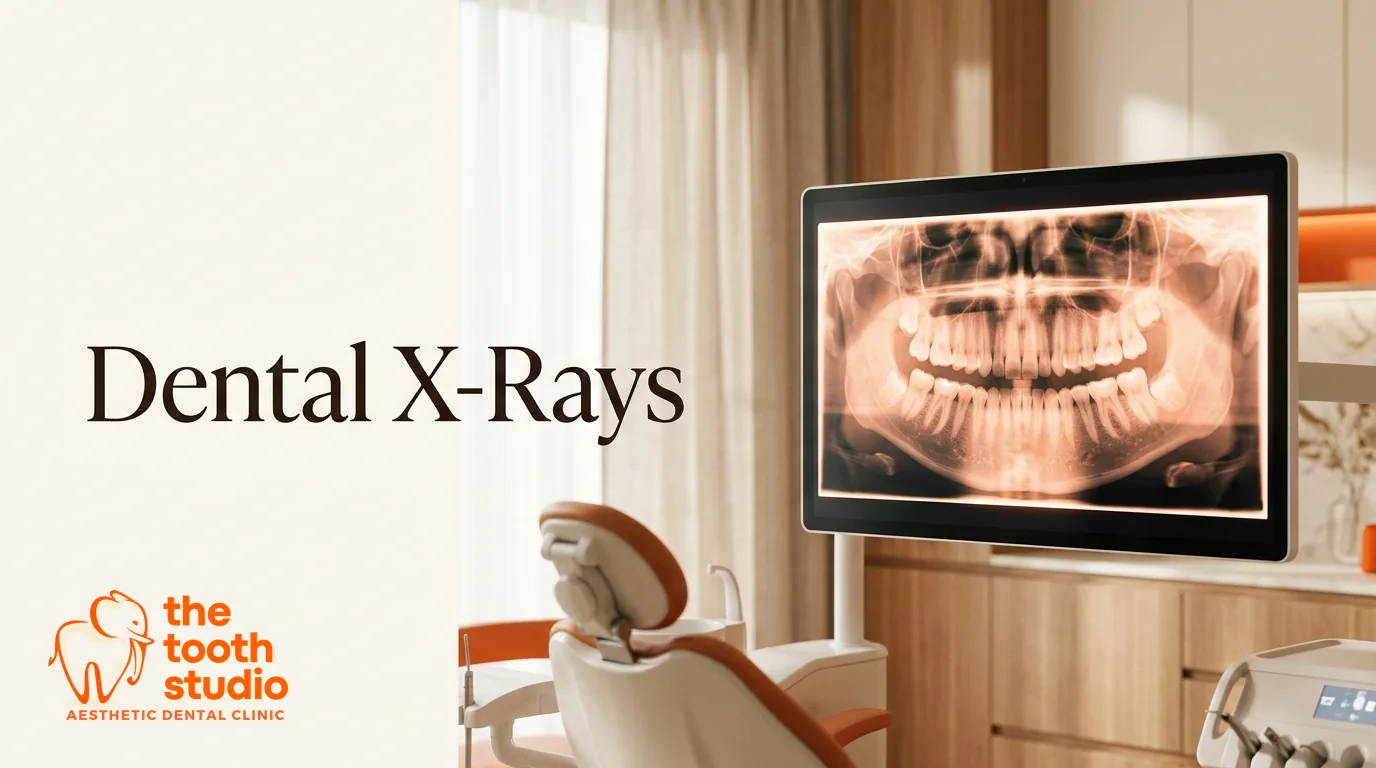
Dental X-rays help dentists see problems hidden between teeth and below the gums. Many patients ask about safety, and the reassuring answer is that modern dental X-rays use very low radiation.
Dental X-rays are safe, using very low doses of radiation, especially with modern digital sensors that cut exposure further. They reveal decay between teeth, infections, bone levels and impacted teeth that cannot be seen otherwise. Frequency depends on your needs, often every 1 to 2 years for healthy adults, more often if you are prone to problems. Protective measures keep exposure minimal.
Types of dental X-rays
- Bitewing - decay between teeth.
- Periapical - the whole tooth and root.
- Panoramic / CBCT - the whole jaw, for planning.
How often and how safe
Digital X-rays use minimal radiation. Frequency is based on your risk, often every 1 to 2 years for healthy adults. They are part of a thorough check-up.
Book a check-up at The Tooth Studio.
Have a question about your smile?
Book a consultation with Dr. Keerthi Sudireddy, or get free guidance on WhatsApp.