


The Tooth Studio
Boutique aesthetic dentistry Painless & digital Dr. Keerthi Sudireddy, Endodontist & Implantologist Open all days, 10:30am – 9pm Kukatpally, Hyderabad Boutique aesthetic dentistry Painless & digital Dr. Keerthi Sudireddy, Endodontist & Implantologist Open all days, 10:30am – 9pm Kukatpally, Hyderabad
Restorative Dentistry

Inlays and Onlays: When You Need Them

Inlays and Onlays: When You Need Them - The Tooth Studio, aesthetic dental clinic in Kukatpally, Hyderabad

When a cavity is too large for a simple filling but the tooth does not need a full crown, inlays and onlays are the ideal middle-ground restoration.

Quick answer

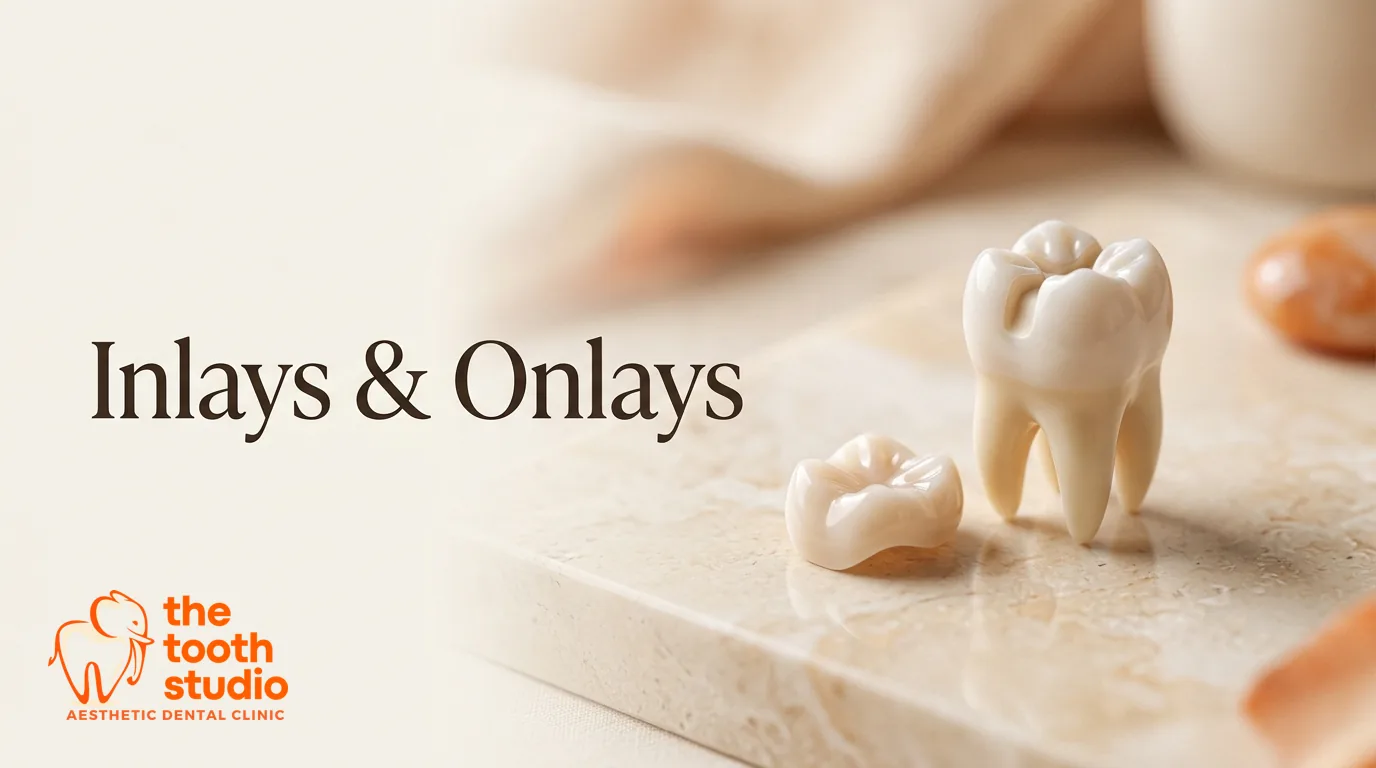
Inlays and onlays are custom-made restorations that fit a prepared tooth precisely. An inlay sits within the tooth's cusps; an onlay also covers one or more cusps. They are stronger and longer-lasting than large fillings and more conservative than crowns, preserving more natural tooth. They are usually made of ceramic for a natural look.

Inlay vs onlay vs crown

  • Inlay - fits within the chewing surface.
  • Onlay - also covers one or more cusps.
  • Crown - covers the whole tooth (for more damage).

Why choose them

They restore strength while keeping more natural tooth than a crown, and last longer than a large filling. Compare with crowns.

Ask if an inlay or onlay suits you at The Tooth Studio.

Have a question about your smile?

Book a consultation with Dr. Keerthi Sudireddy, or get free guidance on WhatsApp.

Good to know

Frequently asked questions

An inlay fits within the cusps of the tooth's chewing surface, while an onlay also covers one or more cusps. Both are custom-made restorations.

When a cavity is too large for a strong filling but the tooth does not need a full crown, an inlay or onlay restores strength conservatively.

They preserve more natural tooth than a crown, so they are preferred when the damage is moderate. Crowns are used for more extensively damaged teeth.

They are durable and long-lasting, often outlasting large fillings, especially with good oral hygiene and regular check-ups.

Keep reading

More from the journal