


 By Dr. Keerthi Sudireddy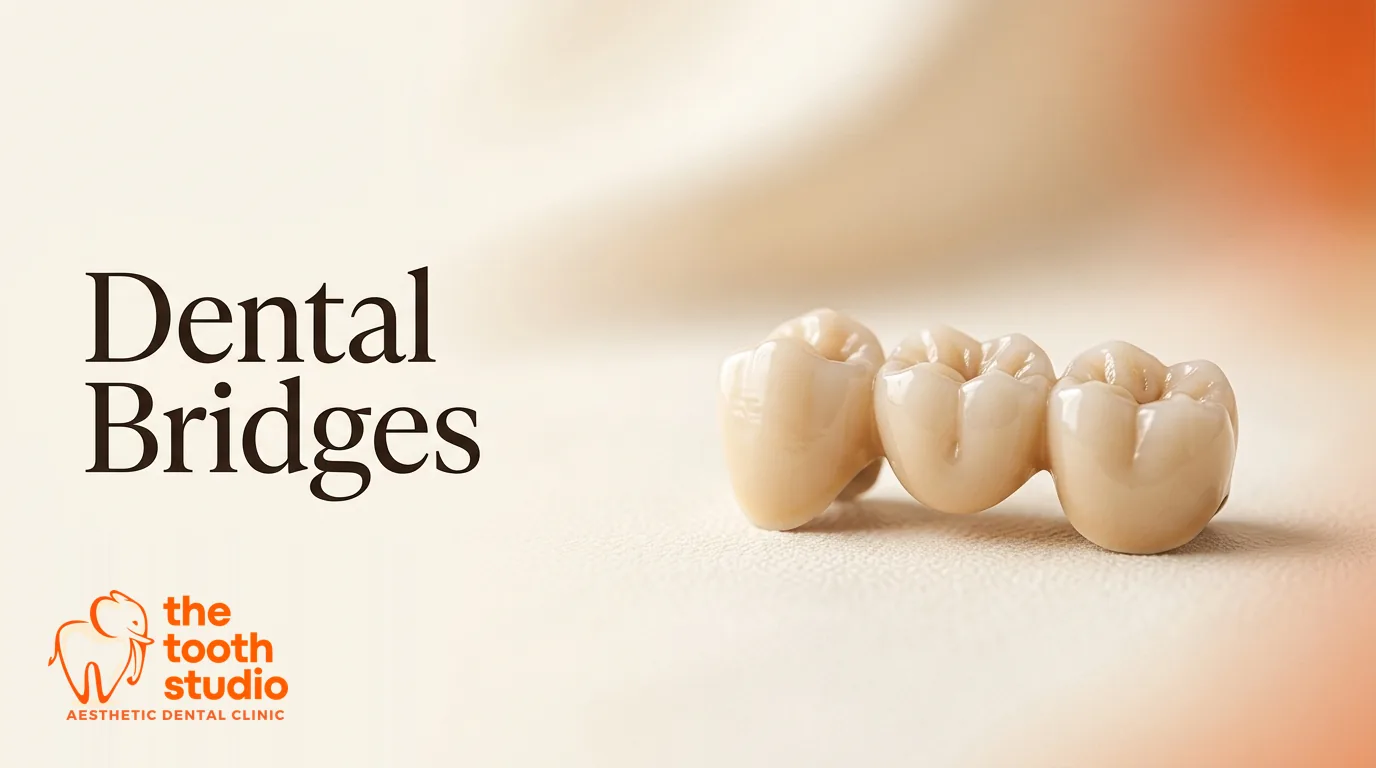
A dental bridge is a fixed way to replace one or more missing teeth by anchoring to the teeth on either side of the gap. It is a reliable, quicker alternative to an implant in the right cases.
A dental bridge fills a gap using a false tooth held by crowns on the neighbouring teeth. It is fixed, natural-looking, and usually completed in two to three visits. A good bridge lasts ten to fifteen years. It is faster and non-surgical compared to an implant, but the supporting teeth must be trimmed.
Types of bridges
- Traditional bridge - crowns on both neighbouring teeth hold the false tooth; the most common type.
- Cantilever bridge - anchored on one side only, for specific cases.
- Implant-supported bridge - held by implants instead of natural teeth, for several missing teeth.
Bridge or implant?
A bridge is faster and avoids surgery, but the adjacent teeth are trimmed and the bone under the gap is not preserved. An implant stands alone and protects bone. See our full implants vs bridges vs dentures comparison.
How long they last
With good hygiene and regular check-ups, a quality bridge lasts ten to fifteen years or more. Cleaning under the bridge daily is key to longevity.
Find out if a bridge suits you at The Tooth Studio.
Have a question about your smile?
Book a consultation with Dr. Keerthi Sudireddy, or get free guidance on WhatsApp.