


 By Dr. Keerthi Sudireddy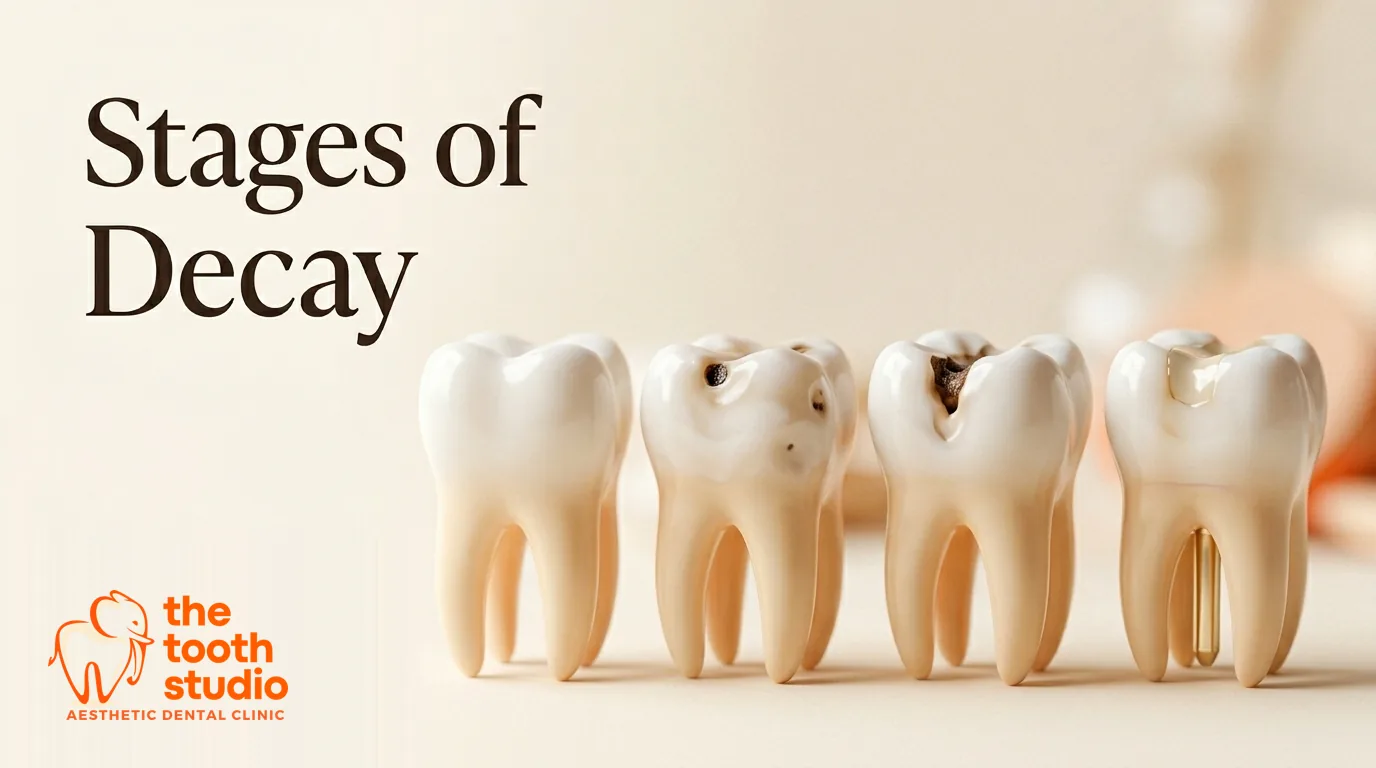
Tooth decay does not happen all at once. It moves through clear stages, and the earlier you catch it, the simpler and cheaper it is to fix, sometimes even reversing it.
Quick answer
Tooth decay progresses through five stages: early enamel softening (reversible with fluoride), enamel decay, dentine decay, decay reaching the nerve (needing a root canal), and abscess formation. Only the first stage can be reversed; after that a filling, crown or root canal is needed. Regular check-ups catch decay in the early, easy-to-treat stages.
The five stages
- Early enamel softening - white spots appear; can be reversed with fluoride and good care.
- Enamel decay - a cavity forms in the outer layer; needs a filling.
- Dentine decay - decay reaches the softer layer and spreads faster; sensitivity begins.
- Pulp involvement - decay reaches the nerve, causing pain; needs a root canal.
- Abscess - infection spreads to the root tip, causing swelling; urgent treatment needed.
How to stop it
- Brush twice daily with fluoride toothpaste and clean between teeth.
- Limit sugary and frequent snacking.
- Have regular check-ups so decay is caught at stage one or two.
Catch decay early at The Tooth Studio with a simple check-up. See our cavity prevention guide.
Have a question about your smile?
Book a consultation with Dr. Keerthi Sudireddy, or get free guidance on WhatsApp.